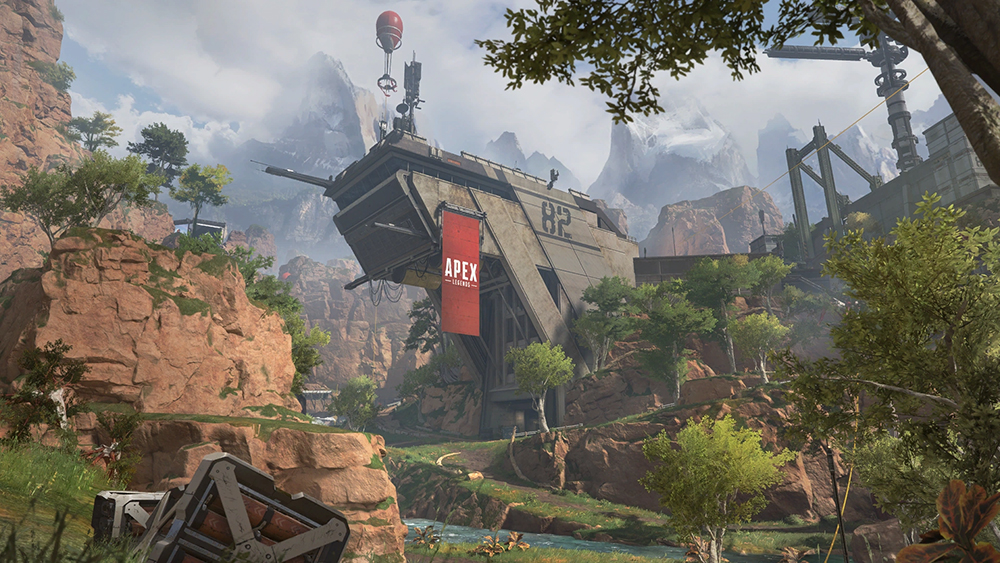
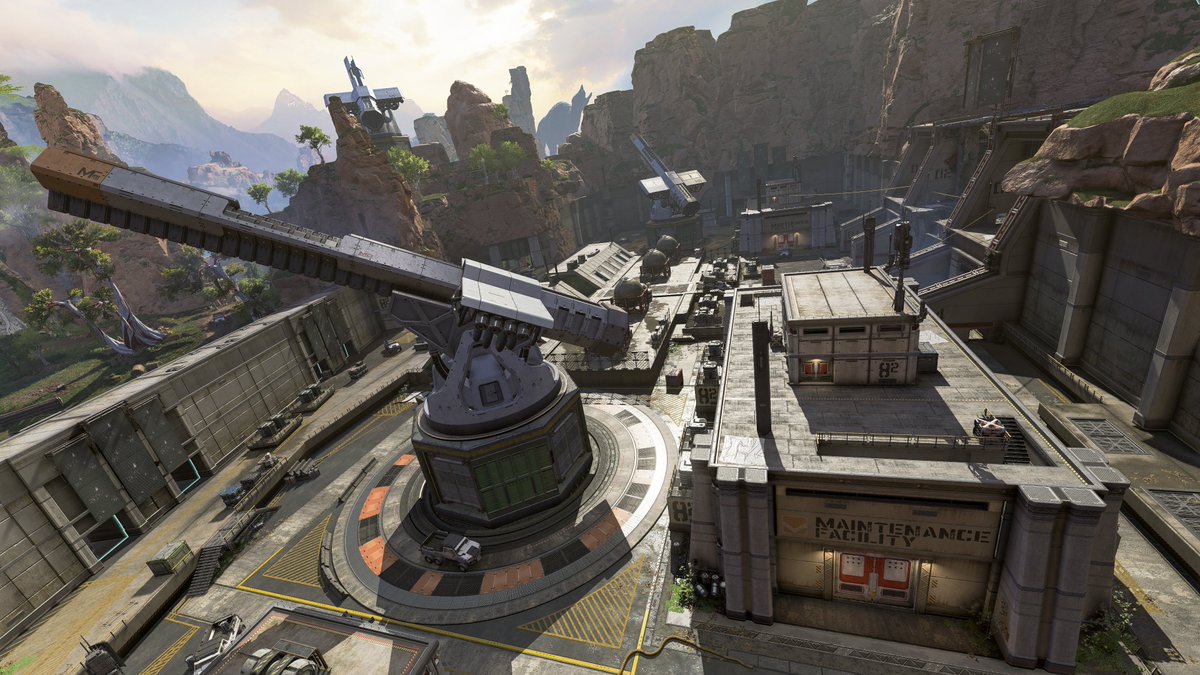
Jason McCord / Level Designer


Apex Legends was released in Februrary of 2019 on PC and Xbox One and Playstation 4.

Every level shown is a product of the whole team, with many assets being designed and implemented by other departments such as art, fx, audio.
While I was the principal designer of Kings Canyon through developement, other designers and even artists helped design some areas. It was truley a team effort.

KINGS CANYON
Launch Version


Kings Canyon In-Game Map


The map is 1.1 mile squared (or 1.8km squared) and contains about 29 uniquely designed towns.

Kings Canyon
was the first map we created for Apex Legends.
I designed and built the macro layout, and 15 of the 17 PoIs.

When we started this project, we did not have the tools or the engine capable of supporting a map of this size. We were constantly breaking the map compiler and exceeding engine limitations, where then code would give us a little more rope. Here's a gif I created that showed Kings Canyon in different stages of completion.


DESIGN BREAKDOWN
Kings Canyon was designed around "zones", which are large areas that feel like big, outdoor rooms. This allows players to peak into the rooms from the chokepoints and decide if they want to enter based on the activity they see. Fights feel more understandable and contained in the room, and afterwards let the squad feel like they won and, in turn, now "own" the room. Until the next squad rolls up.

This makes Kings Canyon feel a bit more like a traditional MP map than a Battle Royale map, which helps with competitive mastery as players learn their favorite positions and routes for moving through the map.

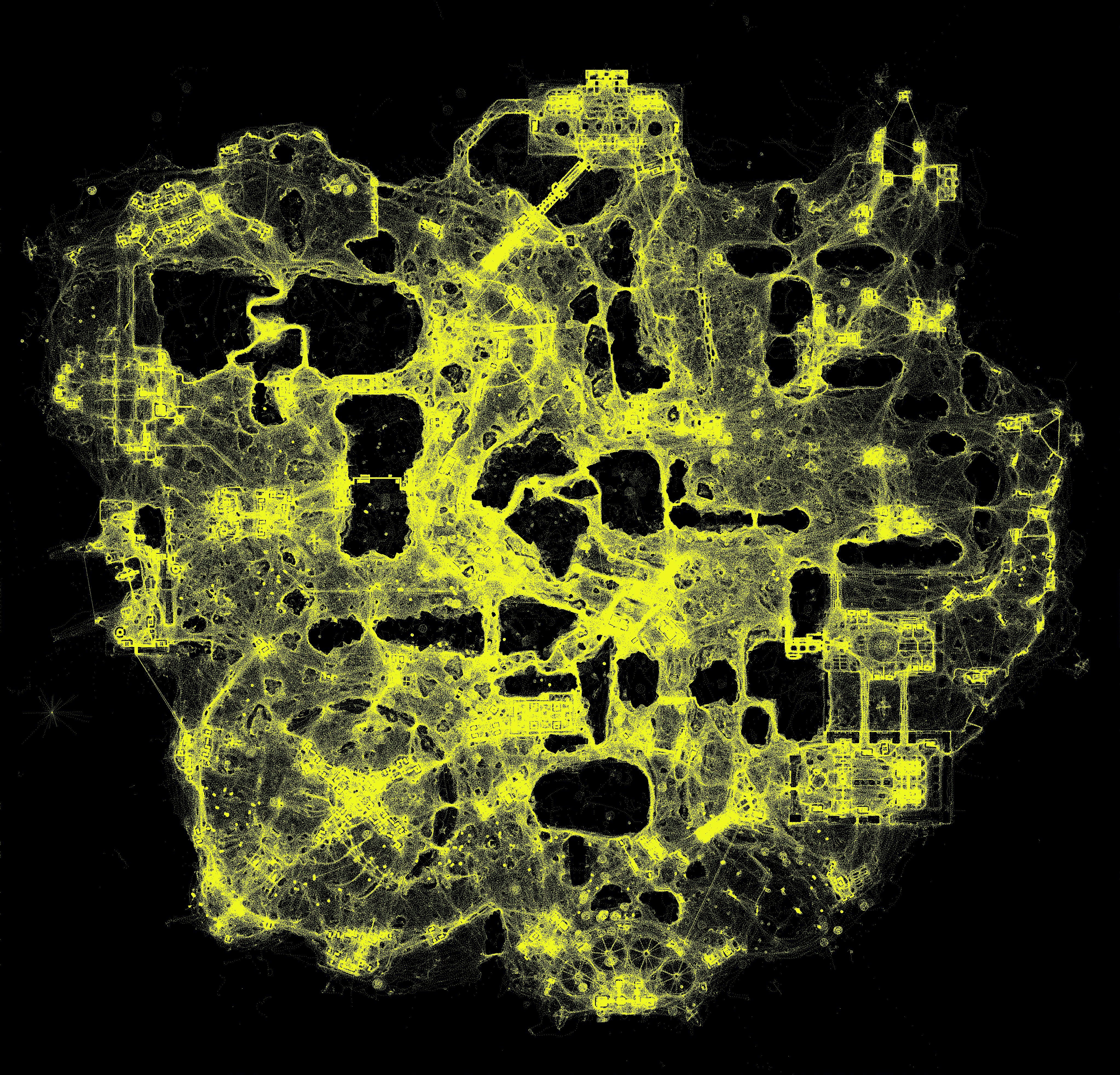
Here's a heatmap of how players moved through Kings Canyon once the game was live. It shows how identifiable player paths are, even in open fields.


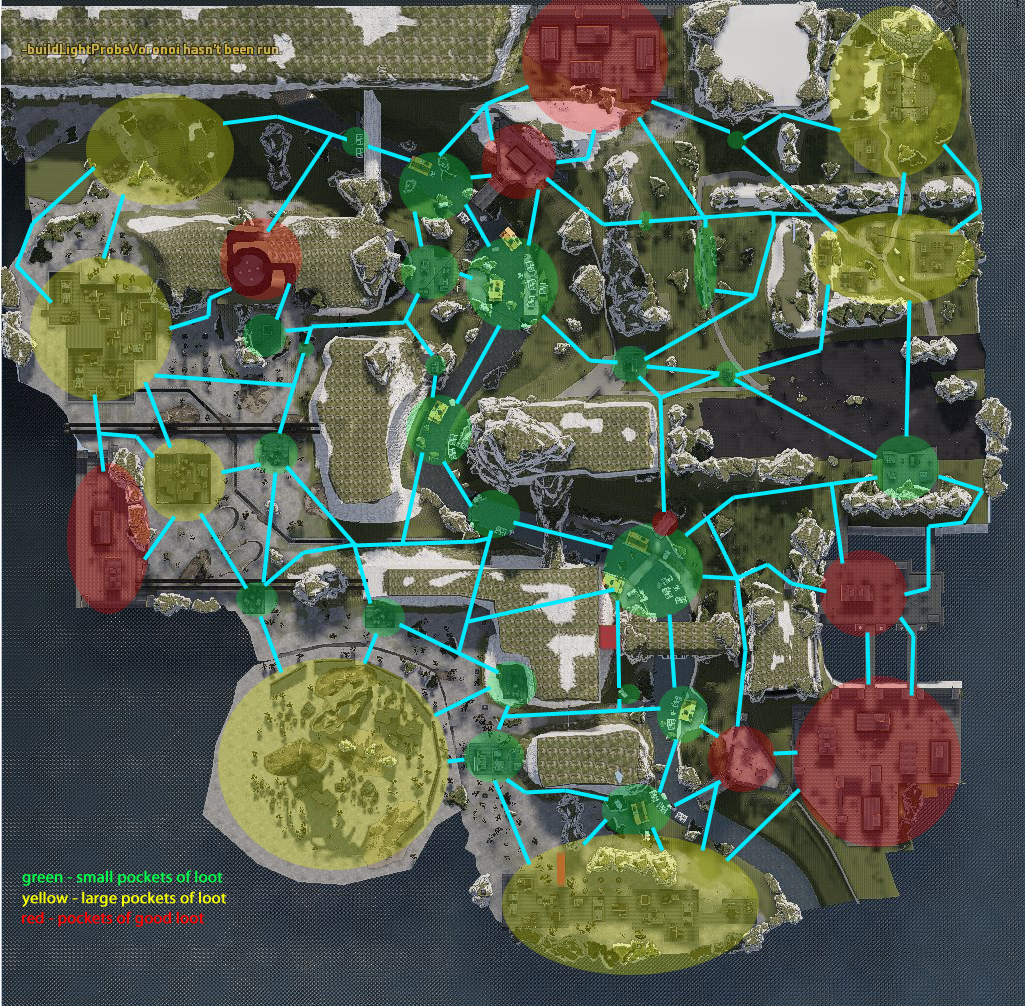
There weren't many Battle Royale maps in the world when I was designing Kings Canyon so I didn't have a lot to learn from. One aspect I needed to work out was how loot would be placed across the map to spread players out at first and then path them through the map to run into each other. Here is a guide I made to help me design where loot should go and how players would rotate between PoIs.


A big inspiration for me was how MMO's design their worlds. Each area you enter needs to feel special and unique, and you can get a vibe for the theme of the area from the entrance. Landmarks rise into the skyline to give you a sense of direction and layout. The chokepoints let us compose beautiful, epic shots where your eye travels from power position to entrances to landmarks.

If you want an in-depth breakdown and history of Kings Canyon, MooreOver did a great video and walkthrough of the map with me.


POINTS OF INTEREST
In order to make Kings Canyon very quickly, I had to go digging through buildings and other assets that had already been made for Titanfall 1 and 2, then the artists would do a pass on bringing the art up to a higher standard.
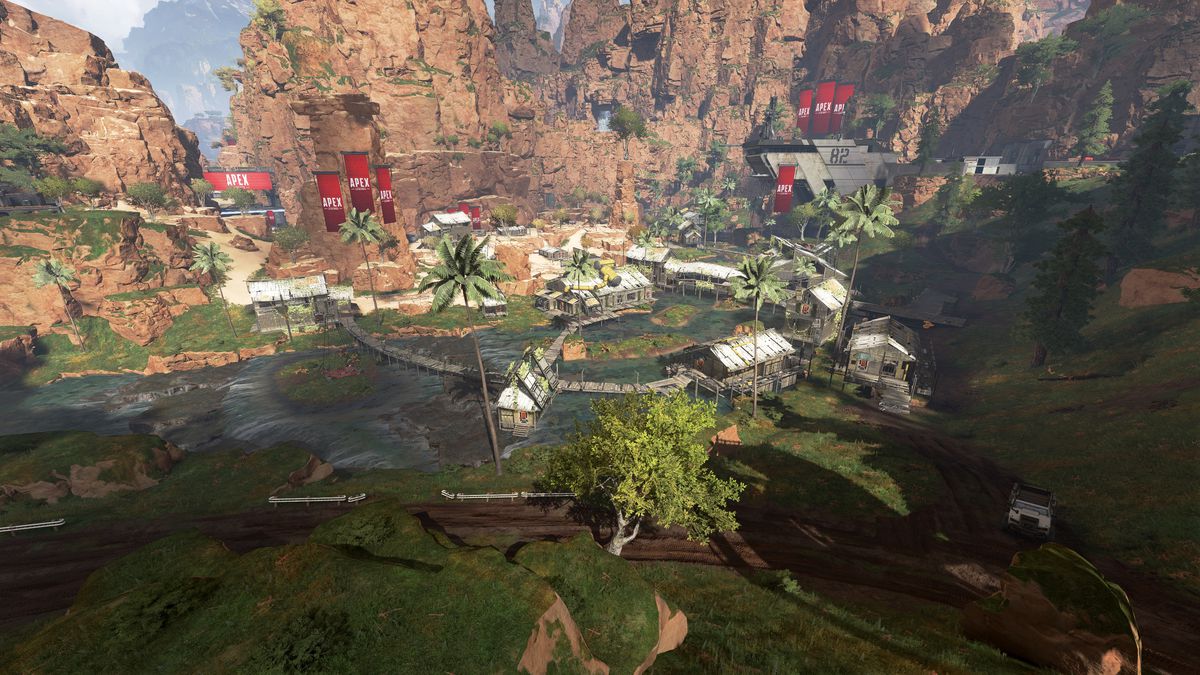
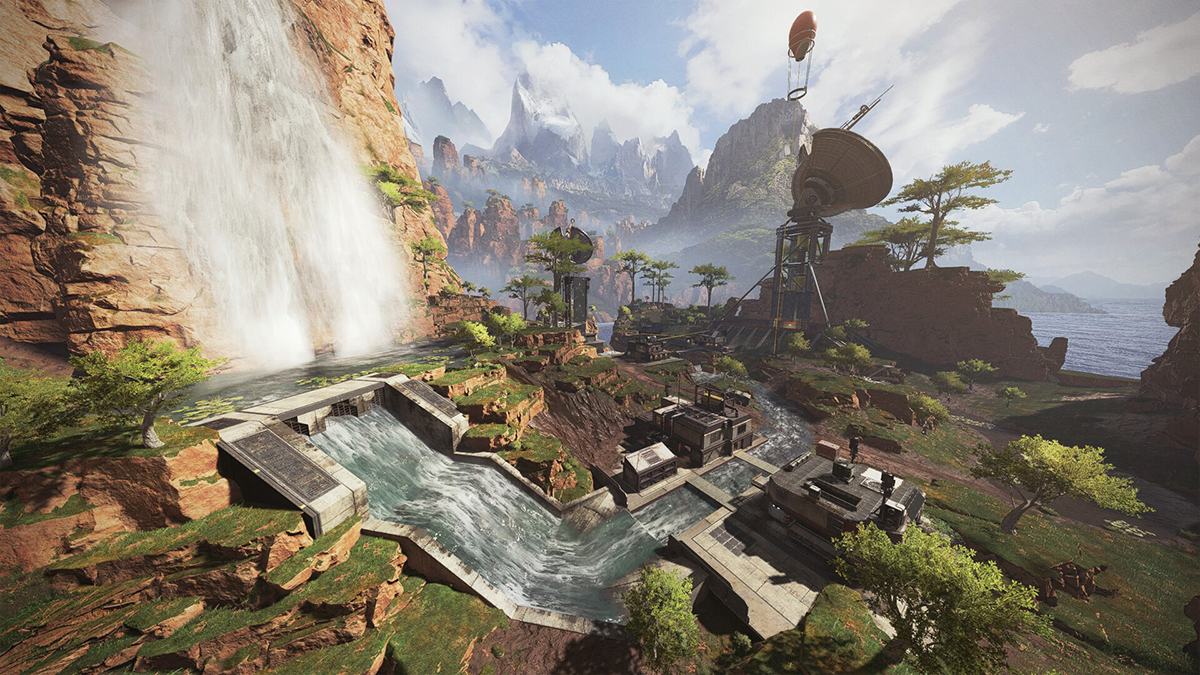
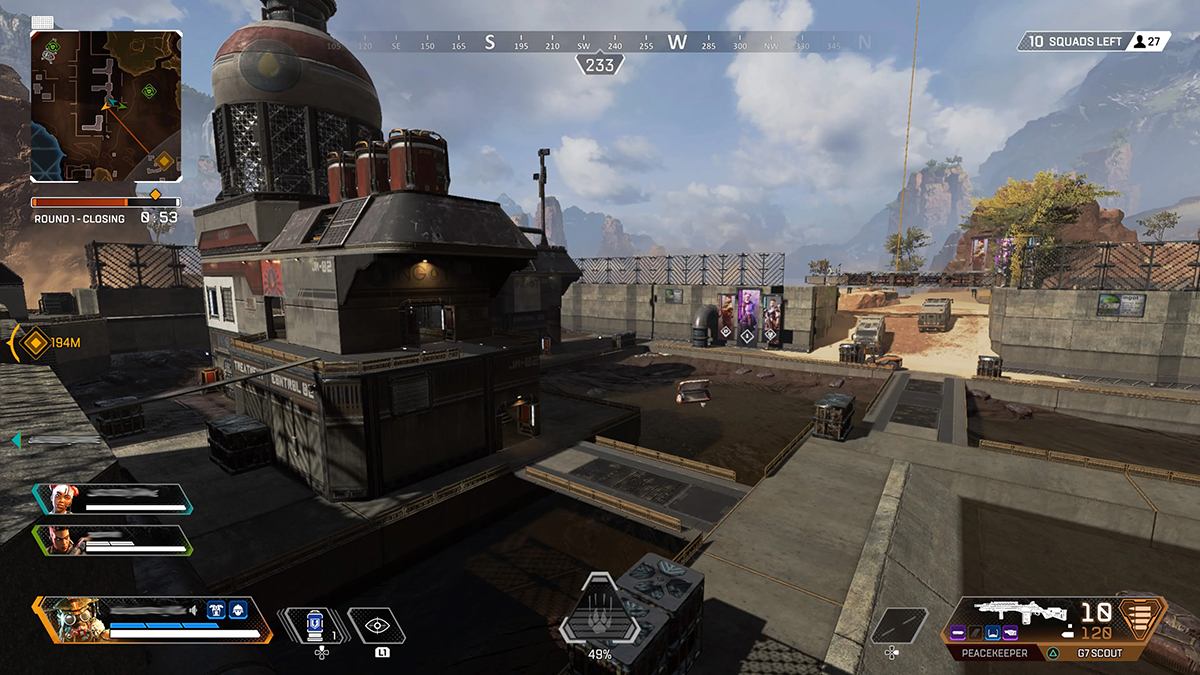
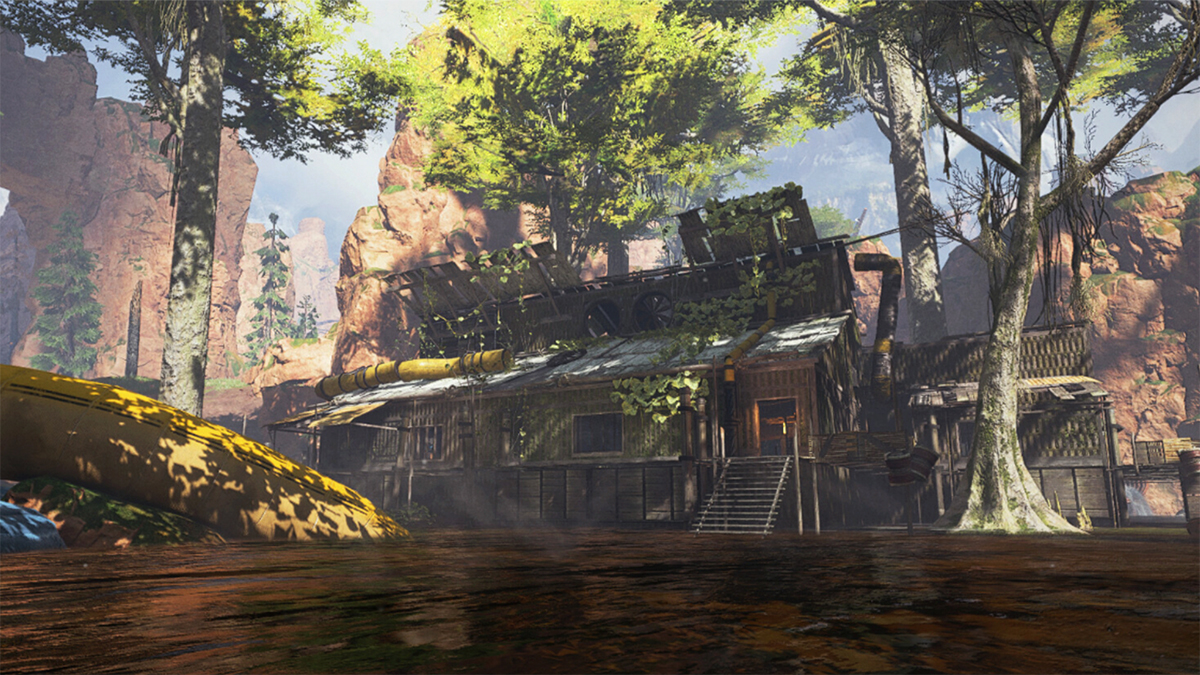
Many of the buildings in the map (Runoff/Water Treatment, Swamps/Bridges/Cascades) were designed by other level designers for previous games. In those instances, my work was designing the unique overall layouts of the PoIs, designing new buildings or adjusting the buildings as needed for Apex combat and looting.

Here are some of the other PoIs I designed in launch version of Kings Canyon.


SKULL TOWN
Point of Interest


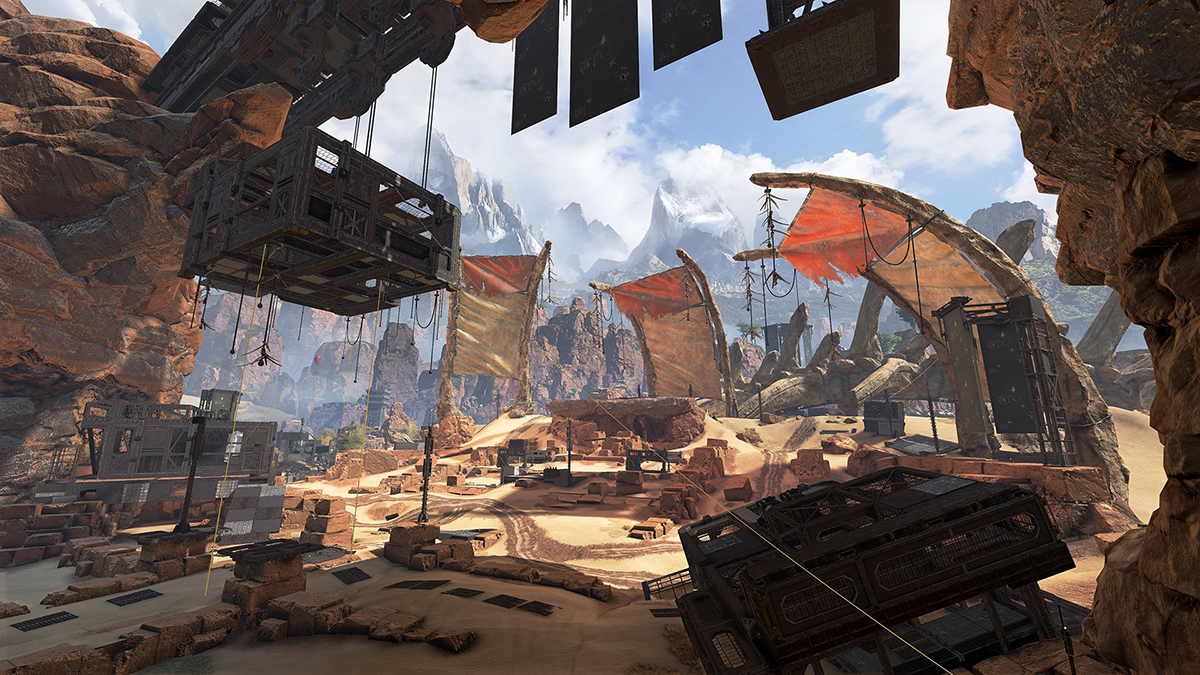
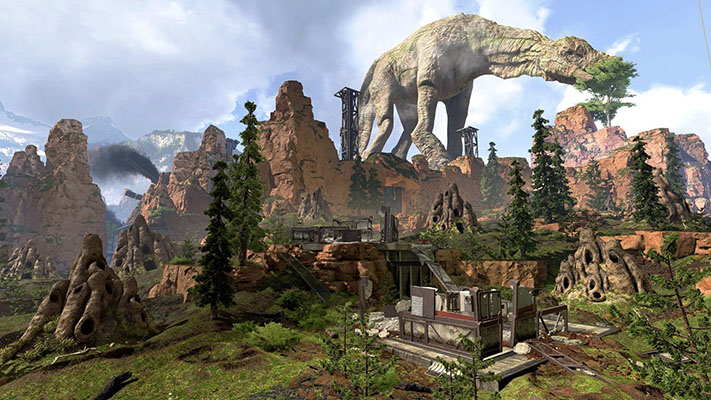
Skull Town is the largest town on the map, named after the giant Leviathan skull that sits off to the side.
I was compelled to use the skull and spine from Boneyard in Titanfall 1 for a PoI.
This quickly became the hot drop after launch, and has since become a memorable location for Apex players.


DESIGN BREAKDOWN
The spine acts as a prime sniping location for the entire zone, which is designed like an X in the middle of a ring of rocks and sand dunes. The ring of rocks acts as a border wall, signaling to the player that they are entering a new space, and to check the spine for snipers before entering.

The arms of the city act as welcoming roads into the center, with plenty of tarps and interiors to act as vertical cover from anyone controlling the spine or the rooftops of the tall apartment buildings in the center. These buildings are the main loot paths through the PoI.

Screenshot Gallery


MARKET
Point of Interest


Market
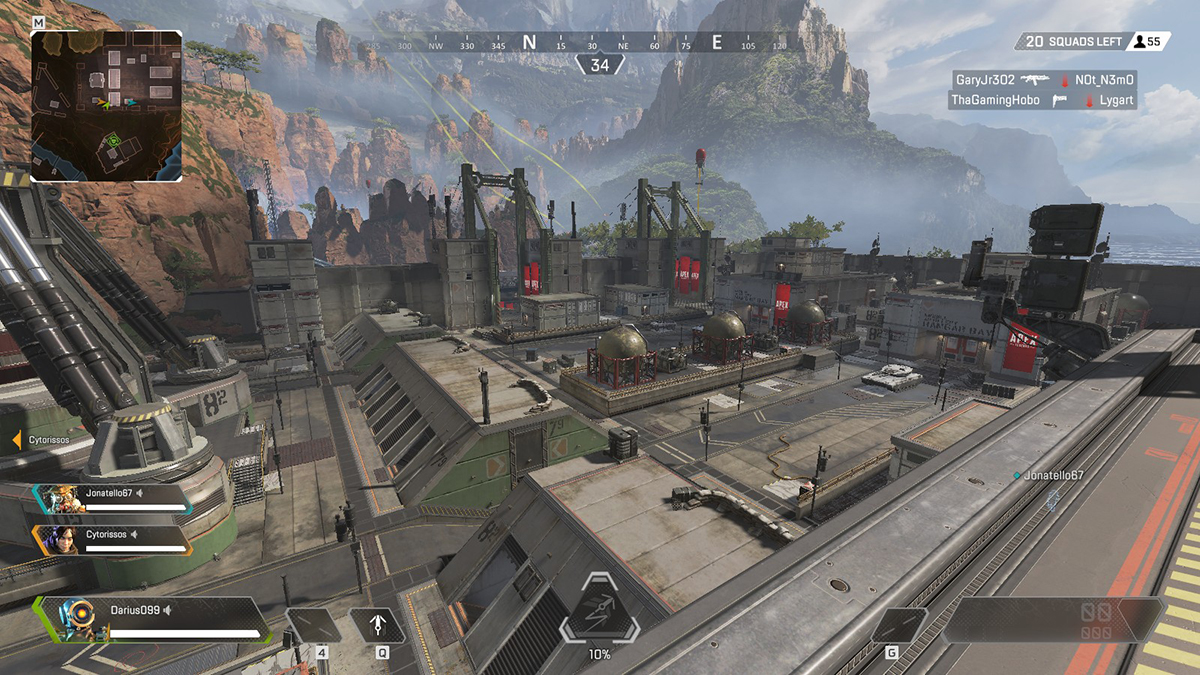
is popular partly because it's near the center of the map, but also because it's an enclosed space that players can easily understand. It's also a very visible shape from the plane.


DESIGN BREAKDOWN
It's designed to be its own little deathmatch area. I use this idea in lots of Kings Canyon locations, but this is the one that embodies it the most. It's fully enclosed and could be an entire, small deathmatch map.

Being enclosed forces some different gameplay. There are very little positioning & flanking options compared to fighting out in the open. There are no airstrikes or distant snipers. Getting third partied is less frequent because that team would need to breach the Market doors, which is a lot scarier than engaging 2 teams fighting from afar with a Longbow.

Later in the game, the Market meta shifts. The inside has been looted, so the rooftop becomes a power position to hold a very heavily trafficed junction.

The windmill town to the South is used precisely to give options for players to loot and fight against a team on the Market roof. This is one of my favorite fights in the game. If the team at windmill town can supress the Market team for just a bit, they can push past the open space and get underneath them. Then, it's all out chaos, players poking up at different angles to fight the rooftop, and controlling that Market roof feels very scary.

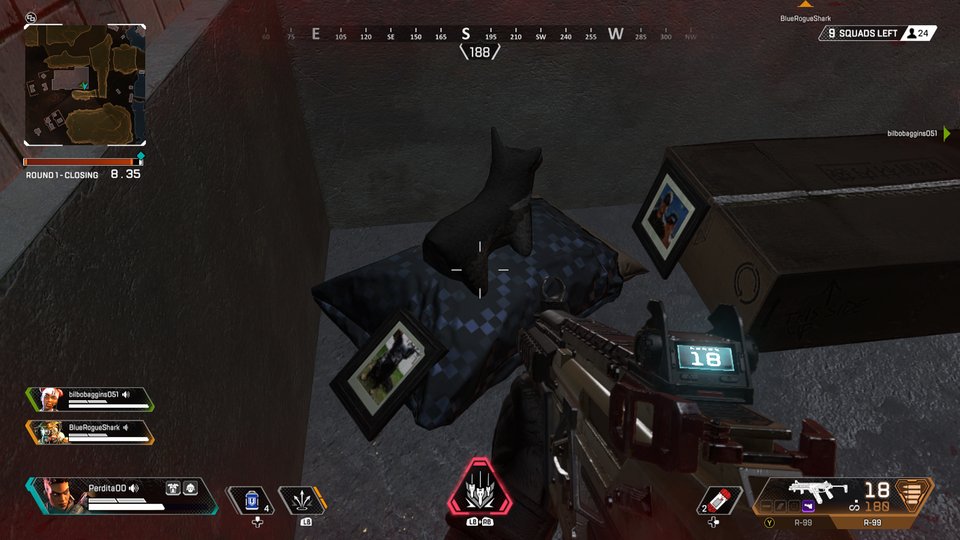
On a personal note, you can find a small homage to my pup of 12 years (Shadie) in a corner of the Market. She passed away while I was working on Kings Canyon, and this little shrine remembers her.

Screenshot Gallery


BUNKER
Point of Interest


Where my Caustic mains at?

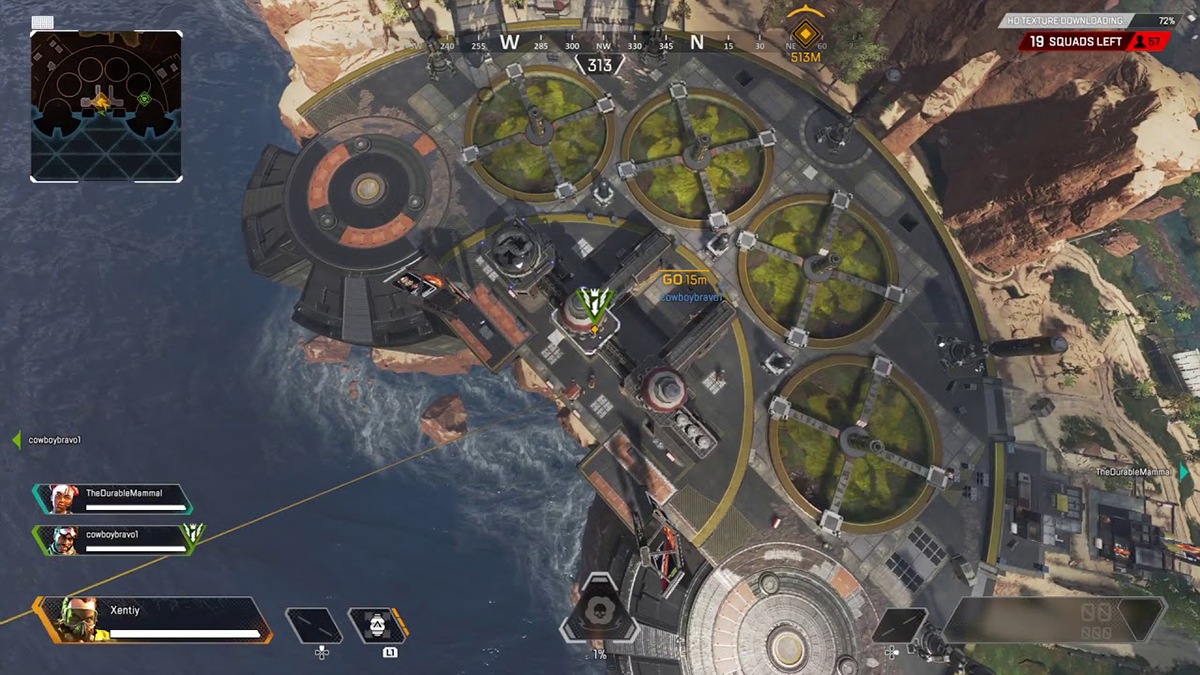
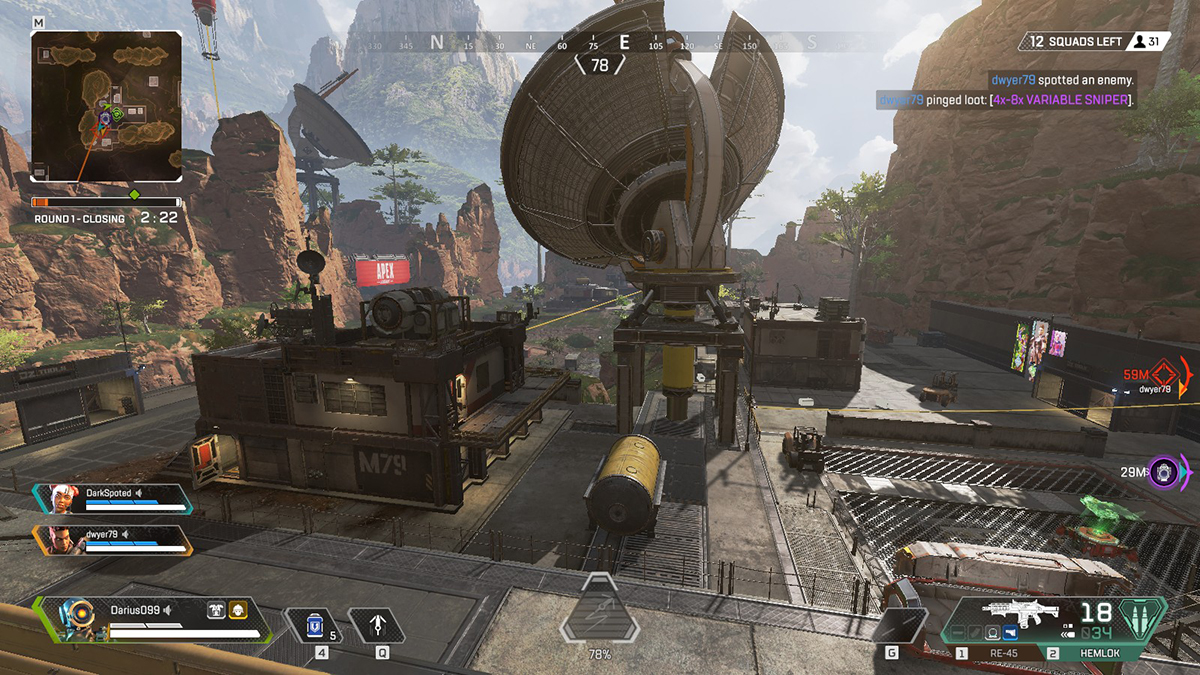
Bunker, up until about a month before shipping Apex Legends, was just an unnamed cutthrough in the mountains. It wasn't designed to be a drop location. It was designed to allow our defensive characters to have areas where they felt powerful against the more aggressive assault characters.

As we playtested Kings Canyon, people would describe to me epic fights they had enjoyed in "that military hallway in the mountains... I don't know what it's called."

Screenshot Gallery


KINGS CANYON
Season 2 Update


For Season 2, I wanted to address some of the areas that were underplayed or problematic in the original layout. Now that we had metrics and heatmaps on millions of players, I could be relatively certain that some PoIs were too chaotic and deadly, which would result in lots of early game deaths. This would make the matches lopsided, where there would often be only a few teams left after the initial drop and the later stage of the match would feel empty.
I also wanted to progress the story of the map and the world, so the writers and I brainstormed changes we could make and the story that would tell.

This was also the first time we were doing a map update, so we didn't know exactly how to scope it correctly. We took a best guess, and decided to change 4 areas, along with a big marketable element - the Leviathans.


REPULSOR DOWN
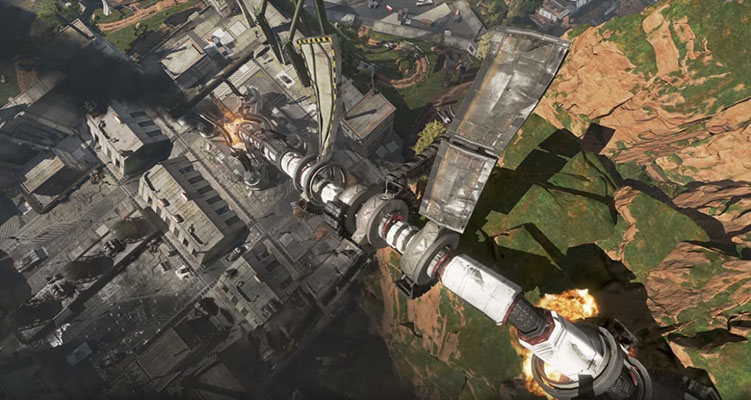
The genesis of the story for Season 2 was that Crypto was a new Legend causing problems with the Apex games. His first act of terrorism was to destroy the repulsor tower at the Repulsor PoI, allowing the creatures in the area to flock back to the island.
This was mostly a visual update, but it was important to show the cause of the creature infestation in the map, and it let players know that storytelling would have meaningful impacts in Apex.


THE CAGE
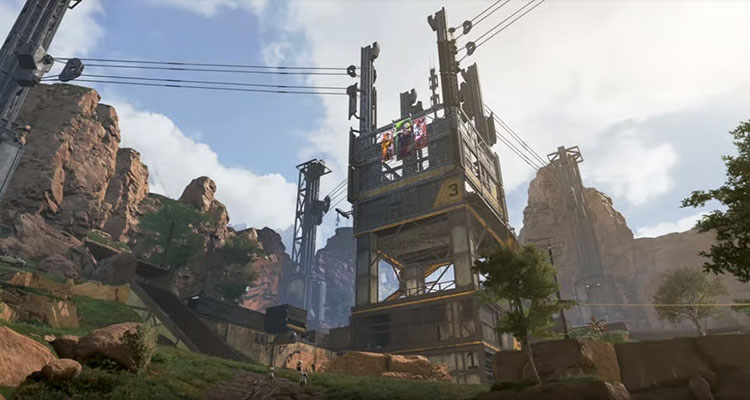
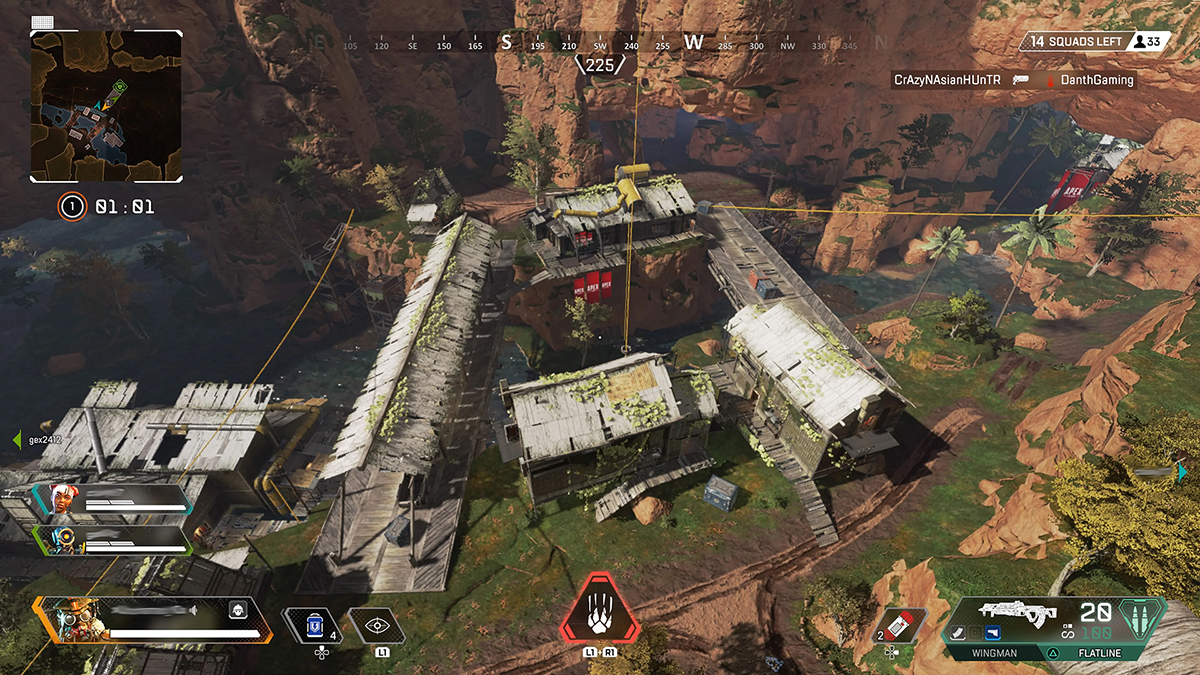
The Cage replaced Bridges, which was a wide area with a ton of vertically, a bunch of buildings, and a powerful sniping tower overlooking it all right in the center of the map. It was a fun area, but it was big enough to draw in lots of players and chaotic enough to be too deadly. Because it was big and in the center of the map, it was easy to get to from the plane, so lots of players dropped there. It was a perfect candidate for a new PoI.
The Cage was designed to be unlike anything else in Kings Canyon. A 4 story building with tight rooms and grating for walls that could overwatch the whole valley, you were both incredibly powerful and vulnerable while looting it. There was also a lot less loot overall. As players adjusted it changed into less of a hot drop, and more of a mid-match control position, as it had powerful sightlines that looked over most of the paths players would need to move through if they were running from the ring.

While designing The Cage, I knew this was a layout I would never make for a typical shooter. It was very "spicy", with more verticality than most FPS games would allow. However, what's great about Battle Royales is that you can have "spicy" areas for people that like it, and those players will get gameplay experiences that they can't get elsewhere. For players that don't like it, they can simply avoid the PoI.


CONTAINMENT
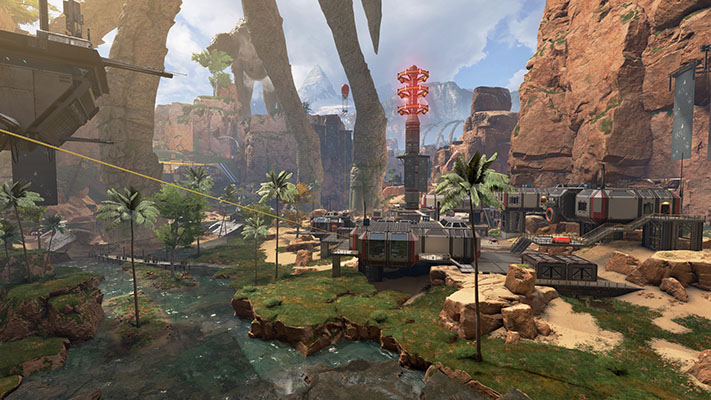
Containment is a small-ish PoI that replaced Cascades. Similar to Bridges, Cascades sat in the direct center of a large valley, which made it a death zone.
Containment added a new visual style for buildings in Kings Canyon, and we also included Flyers in cages. These were animated flyer creatures that would make loud squawks when players got too close. If players were trying to loot quietly, they would need to avoid the cages while looting, or kill the flyers (gunshots were a bit quieter than the birds, and less telling for exactly where they were).
One thing I wanted to preserve from Cascades was the town's relationship with the IMC Watchtower that was nearby. Snipers in that tower could pin down players in Containment, but the tides would turn when the ring pushed them down into the river.


SHATTERED FOREST
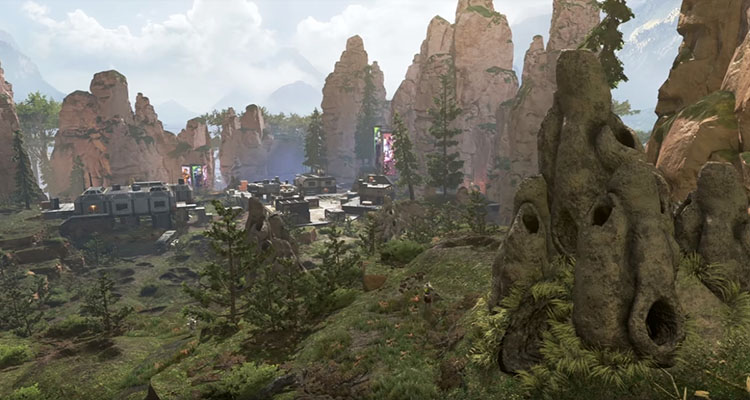
Shattered Forest was originally a bombed out field, with only slight terrain defilade in craters and some burned trees. I wanted to bring a little life back into this area, and help tell the story of the fauna taking over the map.
This was mostly a visual update, but the giant flyer nests and trees/bushes added a lot more cover, making it a bit safer to be in.
There was a new small town added to the edge of this zone that we later connected to Wraith's Town Takeover, which ran underneath the ground.


LEVIATHANS
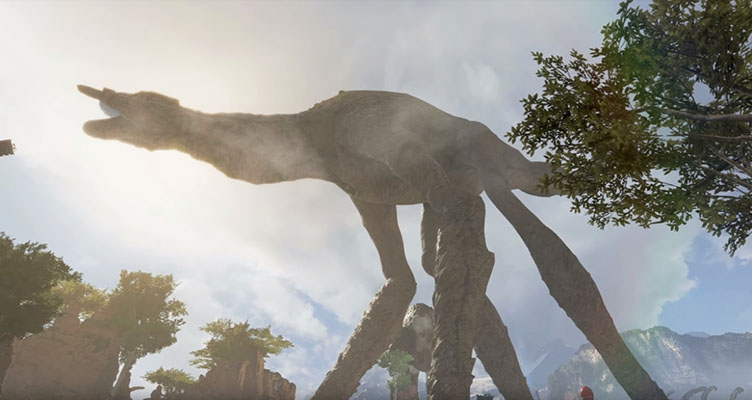
At launch, Kings Canyon had 2 of the Leviathans from Titanfall out in the water. They were low poly models - we only ever had them in the game at a distance - and they had some simple animations that held up fine for the vista.
For the wildlife overtake, an artist suggsted we bring the Leviathans IN to the map. This was a pretty big undertaking, as we not only needed to upscale their art, but code and animation needed to do feature work to make their collision work well while networked and animating.
A fellow designer hooked up their stomps to kill players, and some other fun features like them looking at players during the skydive were thrown in by an engineer. Overall this feature was the toughest to do, but brought a lot of fun personality to the update.


OLYMPUS
Season 7


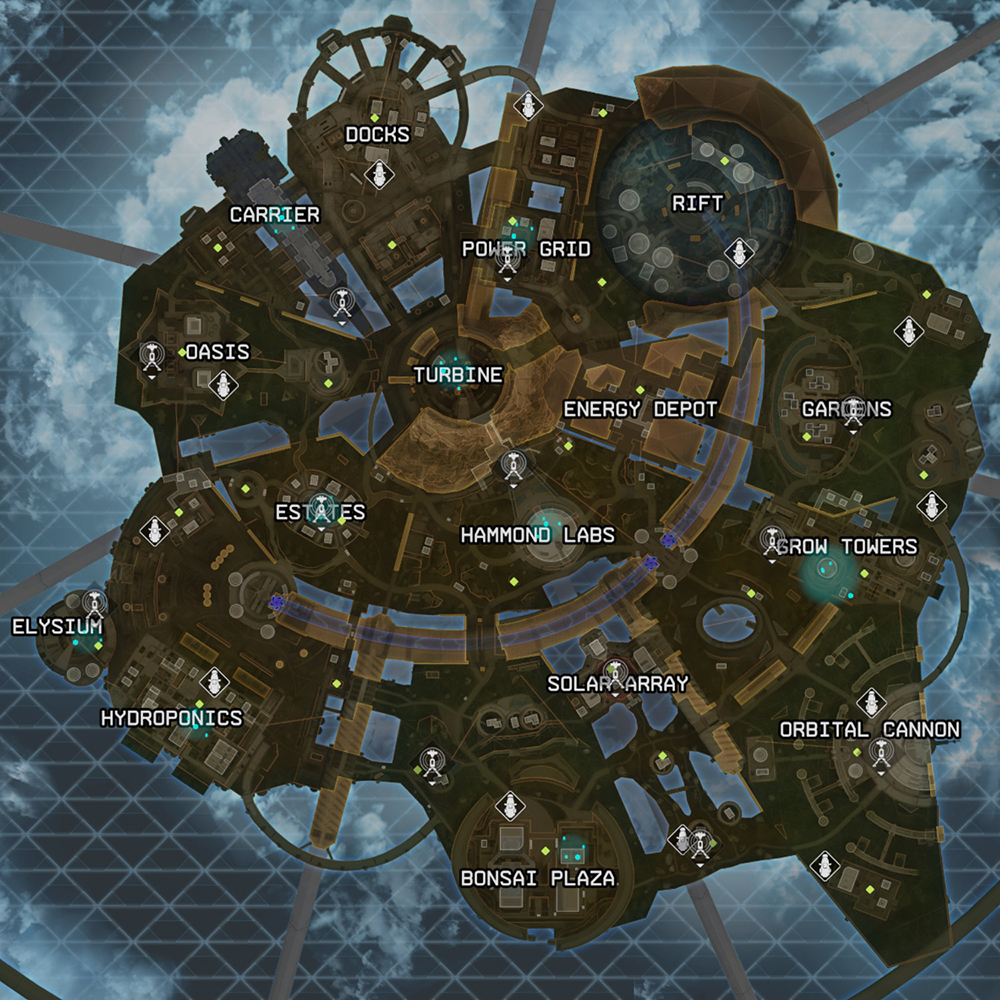
Olympus In-Game Map


Olympus
was our 3rd map for Apex Legends. After Kings Canyon Season 2 Update, I went straight into figuring out what this map would be.
I designed the map's overall concept and early layout, blocked it in and designed a handful of PoIs. Some PoIs were designed by other level designers on the team, and Dave Osei took over the map in an early stage and took it to completion.


DESIGN BREAKDOWN & HISTORY
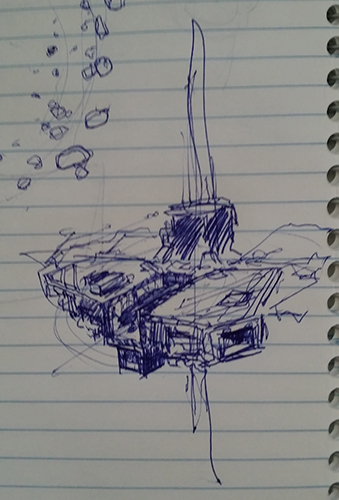
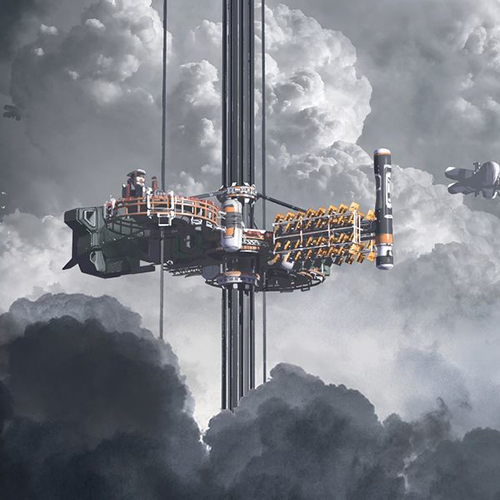
I had been trying to build a floating city map since Titanfall 1. The concept started as a space elevator. This sketch is the first visual interpretation of what I was trying to accomplish. A Respawn artist sketched this down while I was describing what I wanted to do. Later, concept artist Danny Gardner, painted a fully realized version of what it could look like for Titanfall 2.


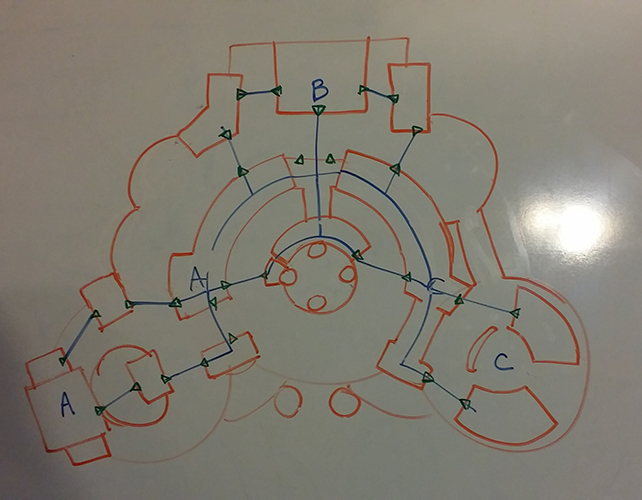
Here's my first layout attempt on my office whiteborad. I blocked this out and played it a few times in Titanfall 2 multiplayer. It wasn't as fun as I had hoped, so I cut it and moved on.


After Titanfall 2 shipped, we moved on to prototyping a game that shall not be named. In that early phase, we spent more time developing out a floating city. This time, it was a full fledged city and a lot of visual development from the concept and environment teams went into making it look really sick. Unfortunately, that's about all I can say about that.

Once that game was tabled (because we decided to ship Apex Legends instead), the idea sat on the cutting room floor for a few more years until I need to start our 3rd Apex map. At that point, I tried one last time to bring it back, now with a look that was less space elevator and more city.

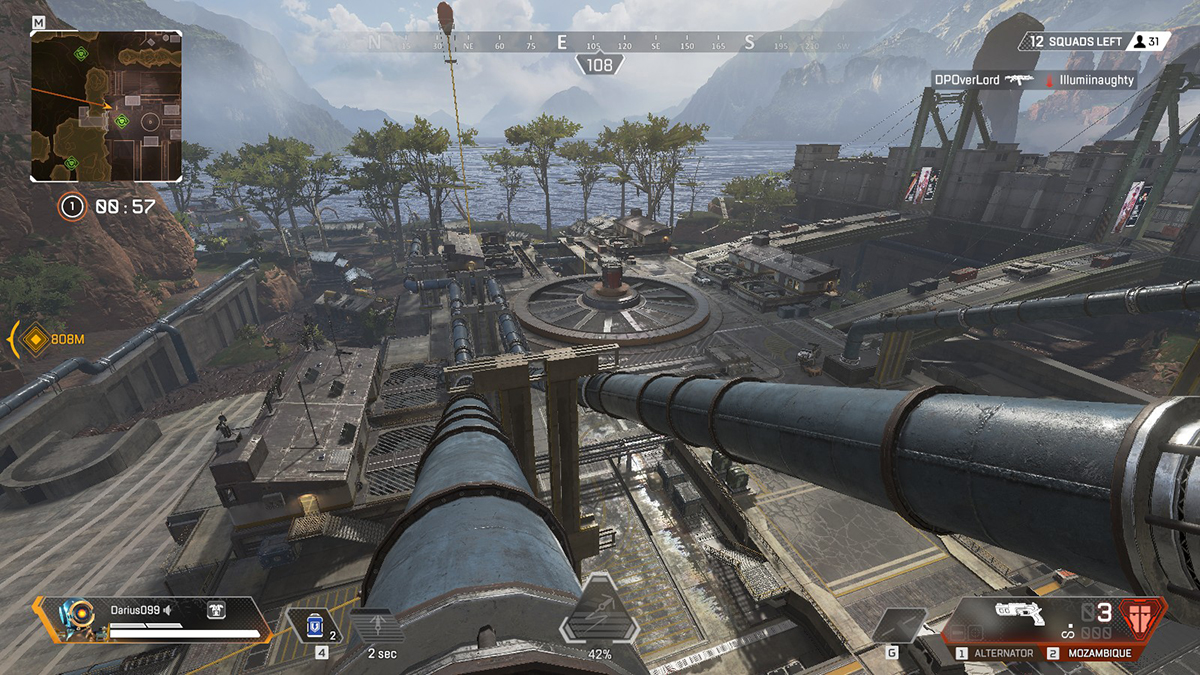
As a level designer, what made me excited about this concept for Apex Legends was using open voids (death pits) as pathing blockers, instead of canyon walls. Up to that point, Kings Canyon and World's Edge had used large rocky walls to create zones and chokepoints. This worked well, but created a more claustrophic feel compared to other Battle Royale maps in other games. Could I use a big death pit to leave the sightlines open, but still create chokepoints? This also had the added benefit of seeing teams rotate at a greater distance, which helped teams plan their routes better (or gatekeep the chokepoints and force fights).

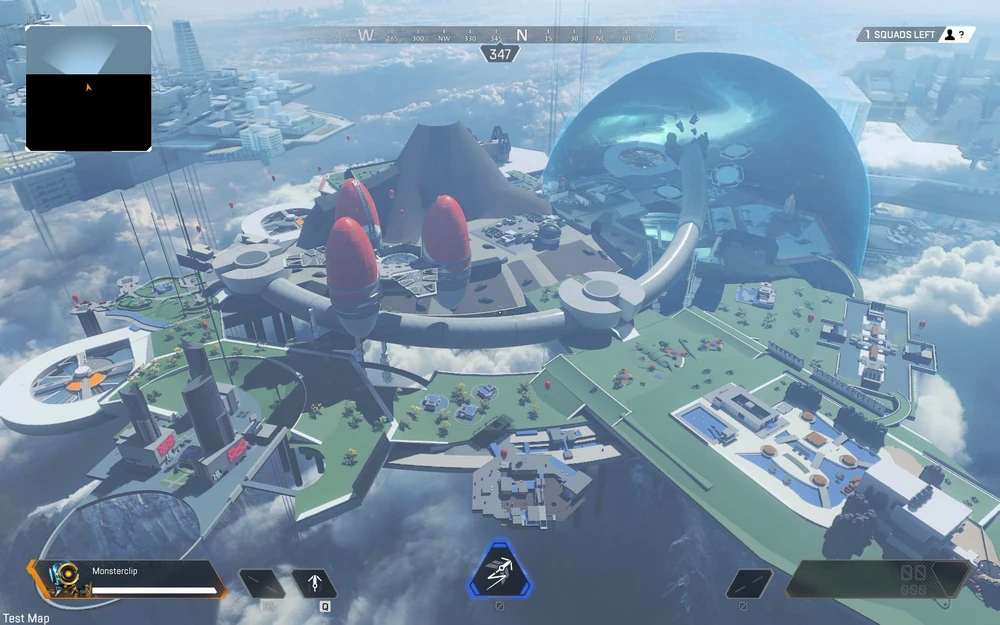
I spent about 6 months blocking out the map, along with PoI's being designed by other level designers that I could drop in to make it playable quicker. Here's the earliest screenshot that still exists. This is right about the time the map was playable for the first time. You can see in the bottom left of the screenshot, it was still marked as a "Test Map".


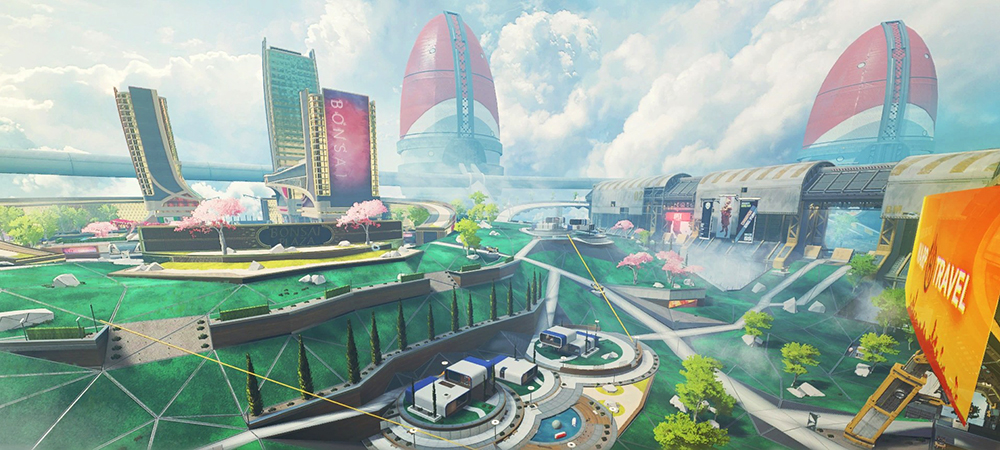
The theme had turned more into a high tech lab in the sky, instead of a full blown city. This was mostly because I was really attached to the Phase Runner idea, and the exploded end that turned into the Rift PoI. We tried to later add some PoIs that would invoke some of the city vibe with Bonsai Plaza and Oasis.

At this point, we had hired Dave Osei as a level designer. I was being promoted to Design Director, so I handed the map off to him and he took it across the finish line for nearly another year of development. He redesigned most of the PoIs and continued to refine the overall look and flow of the map, also solving for the Trident vehicle that we were going to debut in this map. The map turned out great, and I was very happy for it to be the last map I worked on for Apex.


MONSTERCLIP.